The Spec-Fluent Cluster
Material awareness as its own axis: denier positions, zipper families, and footnoted compilations.
- Volume
- 05
- Order
- № 05
- Read
- 4 min
- Published
Material awareness, as an axis, is independent of Load Philosophy. This is the observation that takes some time to internalize. The natural assumption is that knowing your fabrics correlates with carrying a lot of them - that the person who reads the laminate stack article is also the person with twelve bags. This is not what the axis predicts. The Spec-Fluent cluster is defined by position on the Material Awareness axis only. You can arrive there from any position on Load Philosophy, System Stability, or Use-case Discipline. The weight-weenie who selected their one bag partly based on the UPF rating of the face fabric is Spec-Fluent. The Preparedness maximizer who chose each layer for its water column rating and laminate family is also Spec-Fluent. The distinction is not how much you carry but how much you know about what it’s made of.
The material nerd has read the X-Pac laminate stack article - the one that explains the cross-weave reinforcement grid and the reflective inner laminate and why VX21 and VX42 are different in ways that affect real-world abrasion behavior. They noticed when a manufacturer quietly switched from one face fabric construction to another between production runs. They may own one of this series’ materials volumes, not because they were interested in bags when they bought it but because the chapter on nylon polymer chemistry cleared up something they had been wondering about. The material nerd is not necessarily a gear snob; they simply experience technical detail as interesting rather than tedious.
The denier-chaser has a position on 500D versus 1000D Cordura for everyday carry. The position is nuanced and defensible: higher denier adds abrasion resistance but also weight; the appropriate choice depends on use context and expected abuse level; 500D is sufficient for clean-environment daily commute use; 1000D is warranted for repeated rough treatment. This is not a casual opinion. It was formed through research and, in some cases, empirical comparison. The denier-chaser’s position is correct in the sense that it follows from the evidence they have assembled, and they are available to discuss the evidence.
The YKK faithful checks the zipper first. Before color, before volume, before pocket layout - the zipper. YKK as a brand is not a monolith: VISLON plastic-tooth zippers are not interchangeable with coil zippers, and neither is equivalent to the Aquaguard® water-resistant coil zipper, which is water-resistant (not waterproof - the YKK faithful knows the difference and will make it) by virtue of a polyurethane coating on the coil teeth. AquaGuard® being described as “waterproof” in a review thread is the kind of error that the YKK faithful will correct, without hostility, with precision, because the distinction matters for real use.
Field marks of the Spec-Fluent cluster: corrects specification errors in comment threads without hostility; will note when a reviewer has confused tex and denier; reads the tag material content on bags they encounter in stores, not because they are planning to buy but because they want to know; finds this series’ technical chapters naturally companionable. The material knowledge is not performance. It is genuine interest that happens to be legible as expertise.
A worked artifact: the Deep-Dive Ultra compilation
The Spec-Fluent cluster produces, occasionally, a document that exemplifies what the cluster does at full extension. One such artifact circulated in the carry community in 2025: the “Deep-Dive: Ultra Fabric - Enriched Compilation,” which built on a r/ManyBaggers post by u/strandedvariable and added footnoted manufacturer specifications, peer-cited community delamination threads, a full product matrix for the Challenge ULTRA line, and a forward-looking section on ALUULA Graflyte as a post-adhesive alternative. The document is approximately 142,000 characters - longer than most of the chapters in this series - and contains forty numbered references to manufacturer pages, ASTM-adjacent test data, peer-reviewed UHMWPE photodegradation studies, and community field reports.
It is a useful artifact for two reasons. First, as a worked example of Spec-Fluent behavior: every claim has a footnote; every footnote points to a primary source; every primary source is either a manufacturer publication, an industry-standard test methodology, or a community thread treated as field data rather than gossip. The document does not just know things about Ultra fabric; it shows how it knows them. This is the cluster’s characteristic move - the assembled spec sheet that turns intuition into a defensible chain of references.
Second, as a community-internal phenomenon: the compilation was not produced by a manufacturer, a journalist, or a paid reviewer. It was produced by community members for community members, and the production effort - the reading, the cross-checking, the assembly of the comparison tables - was performed without compensation because the underlying interest in the material was genuine. This is the Spec-Fluent cluster’s primary output: not purchases, but documentation. The bag is a vehicle for the spec sheet, and the spec sheet is the medium in which the cluster does its talking.
A Locked-in Spec-Fluent reader will read the compilation, note one or two corrections worth submitting, and continue carrying the bag they already own. A Searching Spec-Fluent reader will read the same document and arrive at the conclusion that their next bag should be in Ultra 400X, or perhaps in Graflyte if they can find one at retail. Both responses are within the cluster’s behavioral envelope; the axis position the compilation predicts is on Material Awareness, not on System Stability.
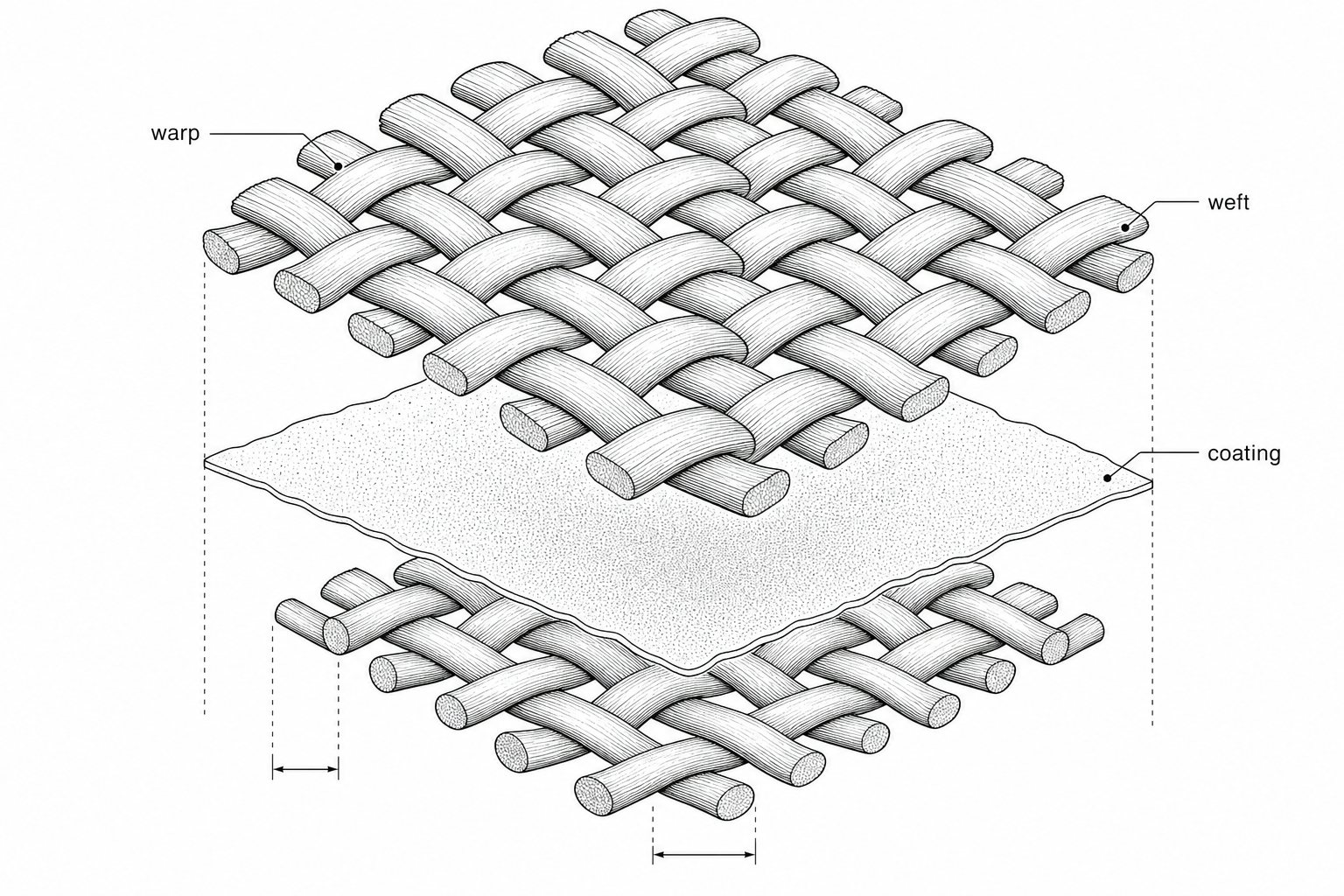 Vocabulary as hobby. Illustrative only.