The Bagger in Their Habitat
The carry signal, the functionality argument, and the flat-lay photograph taken before first use.
- Volume
- 05
- Order
- № 09
- Read
- 4 min
- Published
The Carry Signal
The bag communicates before the owner does. This is not a design principle being advocated here - it is an observation about how carry functions in social contexts. A well-maintained, single sling bag in a muted technical fabric signals one set of priorities: minimalism, perhaps, or deliberate system discipline, or both. A heavily organized backpack with modular attachments and several external access points signals another. A classic canvas tote from an independent bookshop, carrying a laptop and lunch, signals a third thing that is at least partially distinct from the others.
Cornell Lab’s definition of field marks - the distinctive patterns used for identification after considering size, shape, color pattern, behavior, and habitat - applies with unusual precision here, because the carry community is partially defined by its literacy in exactly these signals. The community can read a bag and infer an axis position. A first-generation one-bag-style backpack in VX21 X-Pac (cross-weave reinforcement grid, reflective inner laminate, designed for low-volume high-durability carry) communicates differently from a structurally similar bag in Robic 1680D nylon: not because one is better, but because each fabric choice is also a signal about what the carrier knows and what they chose to prioritize. The Spec-Fluent reader perceives this. The Chemistry-blind observer sees two similar backpacks.
This reading of carry signals is community-specific. Outside the community, a well-maintained technical backpack is a nice bag. Inside the community, it is a set of positions.
Bag as Identity
There is a tension at the center of gear enthusiast culture, and the carry community is not exempt from it. On one side: “it’s just a bag.” On the other: the community exists. It has 869,000 members in r/onebag alone, it has produced a vocabulary, it has generated enough sustained discourse to support a substantial run of materials and taxonomy writing. These two facts are in tension, and the community knows it, and the way the community usually resolves the tension is through the functionality argument.
The functionality argument goes: the bag curation is not fashion, because fashion is aesthetic preference without operational justification. The bag curation is informed selection based on material properties, system requirements, and verifiable carry-performance outcomes. The aesthetic satisfaction is a byproduct, not the point. The research is the point.
The argument holds often enough to be useful. The material knowledge in the technical chapters is real. The carry-system analysis in the shape chapters is real. The question “what is the primary face fabric of this bag and does it match my use context?” is a legitimate question with a right answer. But the community also contains sufficient evidence that the gear curation has become, for many participants, a form of self-expression that the functionality argument partially rationalizes. The distinction between “I chose this bag because it performs correctly for my use case” and “I chose this bag because I am a person who chooses this kind of bag” is not always as clean as the functionality argument implies. The community is aware of this. It is generally fine with it.
The Unboxing Ritual
There is a ceremony, and it is community-specific enough to deserve a field note. The bag arrives. Before it is used, before it is packed, before it has done anything at all, there is a ritual of examination. The flat-lay photograph: the bag opened and spread on a clean surface, every compartment accessible, shot from above. This photograph is taken before first use - before the bag has any context, any wear, any history - because the photograph is a record of potential rather than performance.
The smell is worth noting. Fresh technical nylon has a distinctive smell, and it is distinct if you have noticed it. It is not quite the smell of new car, not quite the smell of new electronics, but it occupies a similar categorical position: the smell of an object that has not yet been used. The carry community, as a self-selected group of people who have noticed these things, tends to notice this smell specifically.
The moment before the bag has done anything is the moment of maximum possibility. Every use case the bag was designed for is still open. The system has not yet been tested; the friction points have not yet revealed themselves; the “I should have bought the 22L instead” has not yet been thought. The unboxing ritual is the community’s way of acknowledging this moment - of marking it before the bag becomes, simply, the bag.
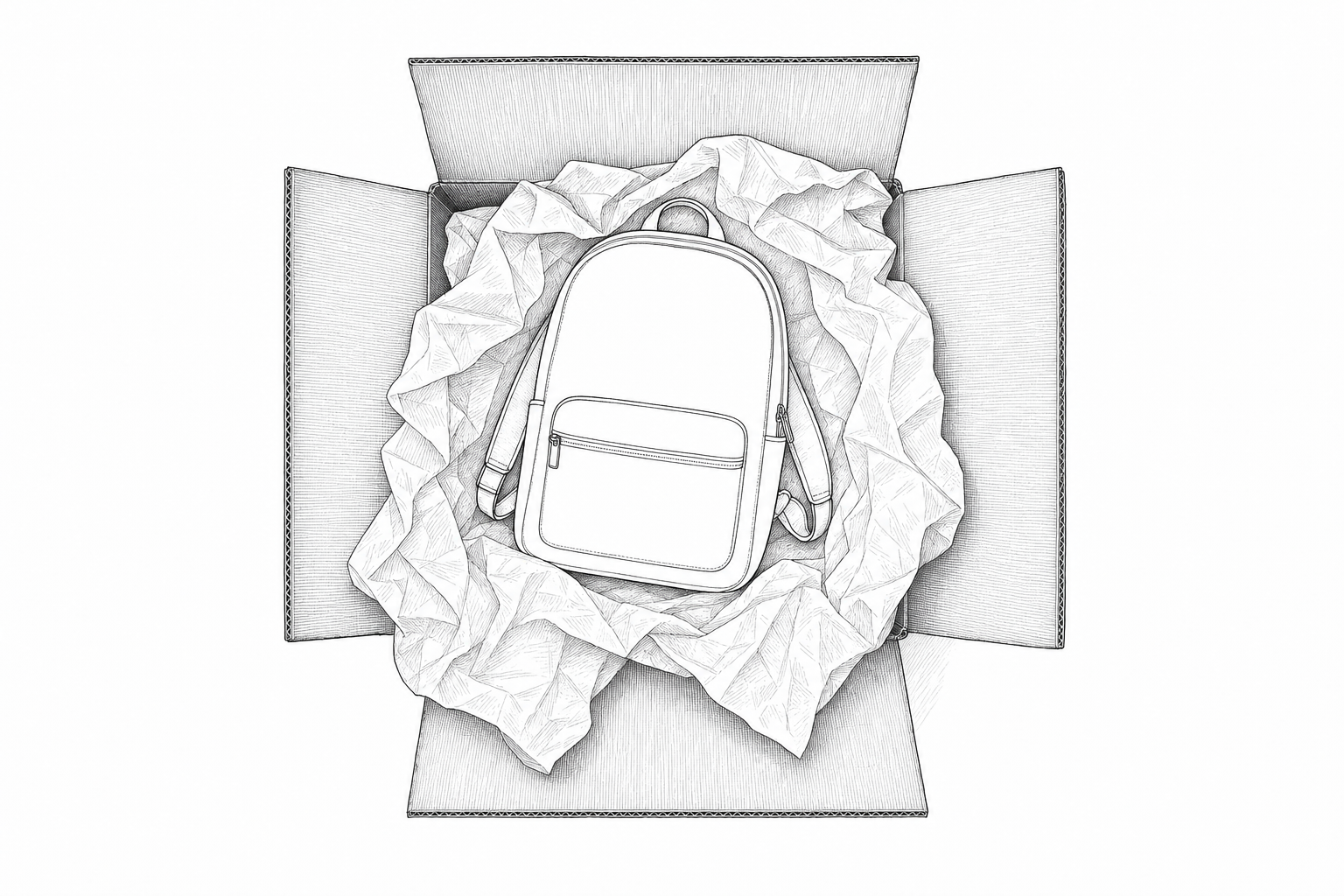 Ceremony without an audience. Illustrative only.
Little Bag Buddy, Vol. V: The Baggers is written in the same spirit as this series: vocabulary over vibes. Nothing here is sponsored or affiliate-linked. Where polling data conflicts with personal recollection, believe the polls.
Reminder: every image in this guide is illustrative only. AI-generated. Not a substitute for direct community observation or the cited poll results.