Polypropylene, Woven and Knit
Cheap, sturdy, photo-degradable; why it cracks at folds.
- Volume
- 02
- Order
- № 04
- Read
- 3 min
- Published
Polypropylene (PP) is a polyolefin like polyethylene, but built from repeating propylene units. The backbone carries a pendant methyl group that changes packing and melting behavior. Result: higher melting point than PE, stiff when thick, and in fiber form unusually fatigue-resistant for its weight.
Woven PP is where the bags in this book stop pretending to be soft film and start behaving like sheet structures: loud when flexed, stubborn under tensile load, honest about where stress concentrates.
From pellets to tape yarn
The specimen most people picture when they hear “woven grocery tote” is not a brand. It is a geometry. Call it what it is: the Big-Blue.
The Big-Blue is a boxy, large-format tote built from flat tape yarns extruded from PP pellets and woven in plain weave (over-under repeat) into a sheet that behaves less like cloth and more like flexible plate. It crinkles. It holds rectangular cargo without apology. It carries awkward loads (soil, pots, gallon jugs, anything that wants corners) because the weave distributes tension across warp and weft like a grid.
Mine entered the house in 2019 as the companion purchase to a bookshelf and a lamp. Stainless rivets at the strap bases. Tape wide enough that a thumb can feel individual strands under load. No romance: just capacity. It still moves furniture, still hauls garden waste, and still survives summers in the trunk.
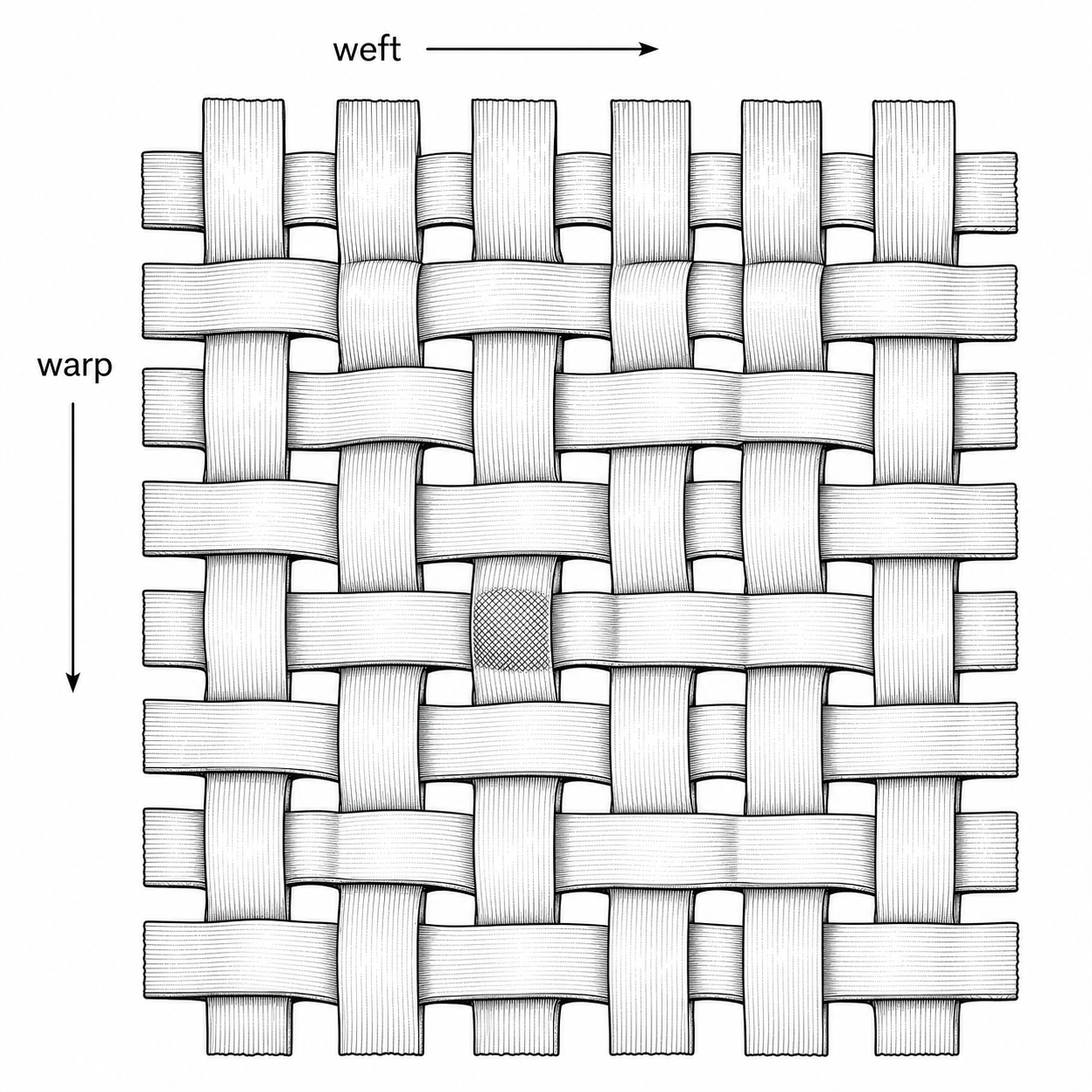
PP tape plain weave: over-under grid structure. Illustrative only.
A Big-Blue rarely dies at the panel.
Where Big-Blues actually fail
Straps attach where geometry demands honesty: stress concentrates at points and seams. In woven PP, failure initiates at stitching: thread elongation, seam creep, rivet tear-out. All of those long before the broad tape field ruptures. Forensic inspection of a retired Big-Blue usually finds the fuse at thread or seam, not at the fabric itself. The tape looks heroic; the junction tells the truth.
Rivet vs. stitched straps
The single most predictive durability tell on a Big-Blue is how the strap meets the panel. Three patterns recur:
- Riveted attachment, often through a reinforcement patch. Stainless or brass rivet plus a doubled tape backer. The load path is mechanical, not adhesive, and the failure point shifts from “thread” to “panel material around the rivet.” That is a much later failure.
- Bartacked stitching, dense block stitching at the strap base. Strong when fresh; the fuse migrates back to thread elongation under repeated peak loads.
- Hot-welded or ultrasonic bonding, common on cheaper totes where straps are fused into the body without sewing. Cleanest looking when new, earliest to delaminate under sun and load.
If you are picking a Big-Blue off a wall, look at the strap base first. The panel is rarely the question.
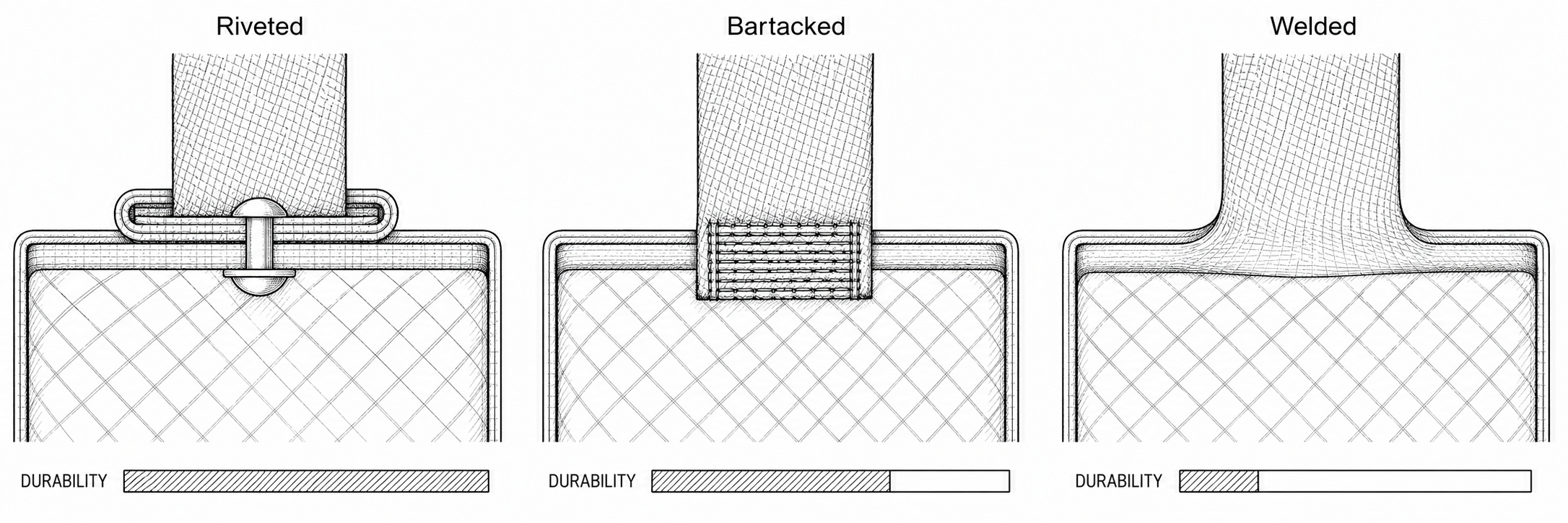
Three strap attachment patterns and their failure modes. Illustrative only.
Knit variants
Some large-format bags substitute knitted PP for woven tape: loops instead of an orthogonal grid. Stretchier body, different tear path, same polymer vulnerability stack. Still UV-sensitive. Still seam-limited.
UV sensitivity
PP degrades photochemically even when it looks fine indoors. Antioxidants buy seasons, not forever. After enough porch summers or trunk seasons, woven PP goes brittle at folds: the same corners that used to complain loudly start failing quietly. Color bleach is the early warning.
The lesson is not heroism. Rotation beats favorites. Two Big-Blues in rotation outlast one Big-Blue left to bake on the back deck.
Woven PP in the inventory
Two archetypes recur in my drawer.
The Big-Blue. Large-format woven PP tape, plain weave, riveted handles, high volume. Used on purpose for moves, gardening, and the runs that involve corners. Status: active, plural, slightly sun-tired, riveted strap bases still tight.
The Vendor-Fair Stiff. A second-class woven PP, thinner tape, stitched (rarely riveted), usually picked up free at conventions, fairs, or community events. Kept past usefulness because discarding a structurally functional polymer feels intellectually untidy. Stitch creep arrives early, often within twenty real loads. The two I keep have been demoted to the garage as bin liners after the original handles started to walk.
The Big-Blue is the one I pack on purpose. The Vendor-Fair Stiff is the one I find in the trunk three weeks after the event and feel a small pang about.
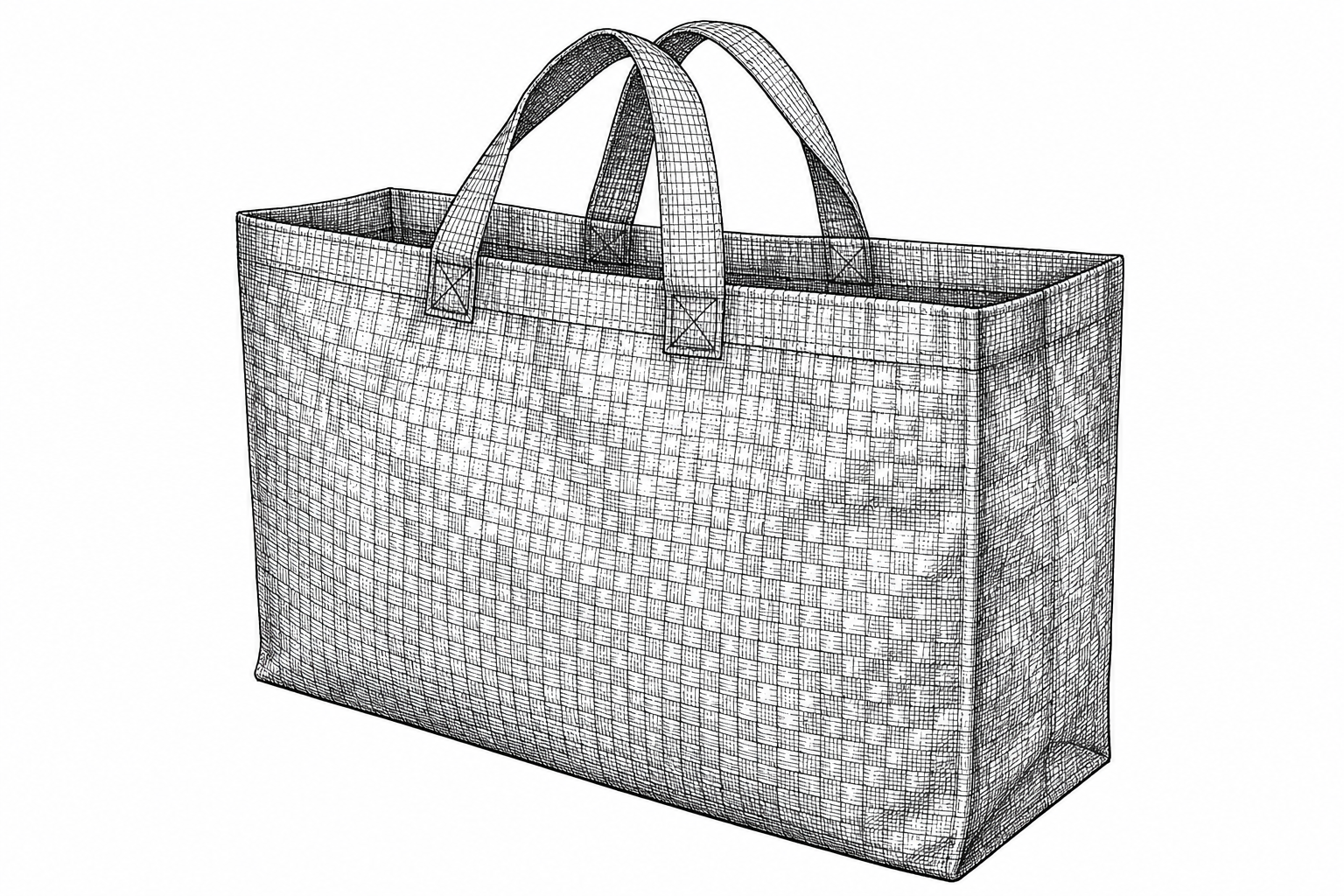
Tape weave as architecture. Illustrative only.