The Preparedness Cluster
Coverage as carry philosophy, with a pouch for the pouch and a precedent behind each item.
- Volume
- 05
- Order
- № 04
- Read
- 3 min
- Published
At the opposite end of Load Philosophy from the Minimizer sits a cluster defined not by minimalism but by coverage. The question the Preparedness cluster is answering is not “what can I eliminate?” but “what might I need?” - and the answer, arrived at through careful consideration of plausible scenarios, is usually: more than I currently carry.
This is not anxiety. The distinction matters. The Preparedness cluster respondent typically characterizes their carry philosophy as statistically thorough rather than worried. The difference, in behavioral terms, is that the preparedness carrier has often been right. The pouch of cable adapters has resolved a situation. The packable rain layer has been deployed. The extra battery has run down and the backup battery has covered the gap. The system has a track record, and the track record justifies the weight [PLACEHOLDER: poll N / wave date]. GAS - Gear Acquisition Syndrome, the community vernacular for what Guitar World describes as “the seemingly uncontrollable impulse to buy” gear - appears in the Preparedness cluster in its fullest expression. This is not used here as a clinical diagnosis; it is the community’s own affectionate term for the purchase-driven upgrade cycle, applied with recognition that the preparedness-oriented carrier has more purchase occasions than most.
The EDC maximizer treats everyday carry - the collection of items carried in pockets or a bag on a daily basis, as EverydayCarry.com defines it - as a system to be optimized for rapid deployment across any foreseeable scenario. The bag is organized by access frequency and use-case logic. There is a pouch for the cables. There is a pouch for the pouch. The loadout is a solved problem, in the sense that the solution is always being refined. “Loadout” and “EDC” enter the conversation without irony.
The “but what if” carrier is the statistical thorough type described above. The kit includes a small first aid pouch because first aid has been needed, a folding knife because it has been useful, a change of socks because it has come up. Each item in the bag has a justification rooted in a real precedent. The “but what if” carrier can explain, for each item, the specific incident that added it to the rotation. This makes the bag heavier than it looks from the outside, and the owner is fine with this.
The layer builder approaches preparedness architecturally. The system is modular: a core bag for daily needs, a day pouch that clips to or nests inside for lighter configurations, a top-up kit for travel contexts. The bags are LEGO - swappable for context, combinable for coverage, separable when only one role is being served. The system’s depth is a design feature, not a failure of restraint. Carry-system chapters elsewhere in this series provide vocabulary for this architecture: nested roles, modular components, contextual load-outs.
Field marks of the Preparedness cluster: volunteers packing lists unprompted; comfortable with bag weight above 1kg loaded; uses “EDC” and “loadout” without self-consciousness; frequently the person in a thread who notes that a bag the poster is considering “doesn’t have enough internal organization.” The bag is a solved problem that keeps needing solving - and the resolving is, itself, a source of genuine satisfaction.
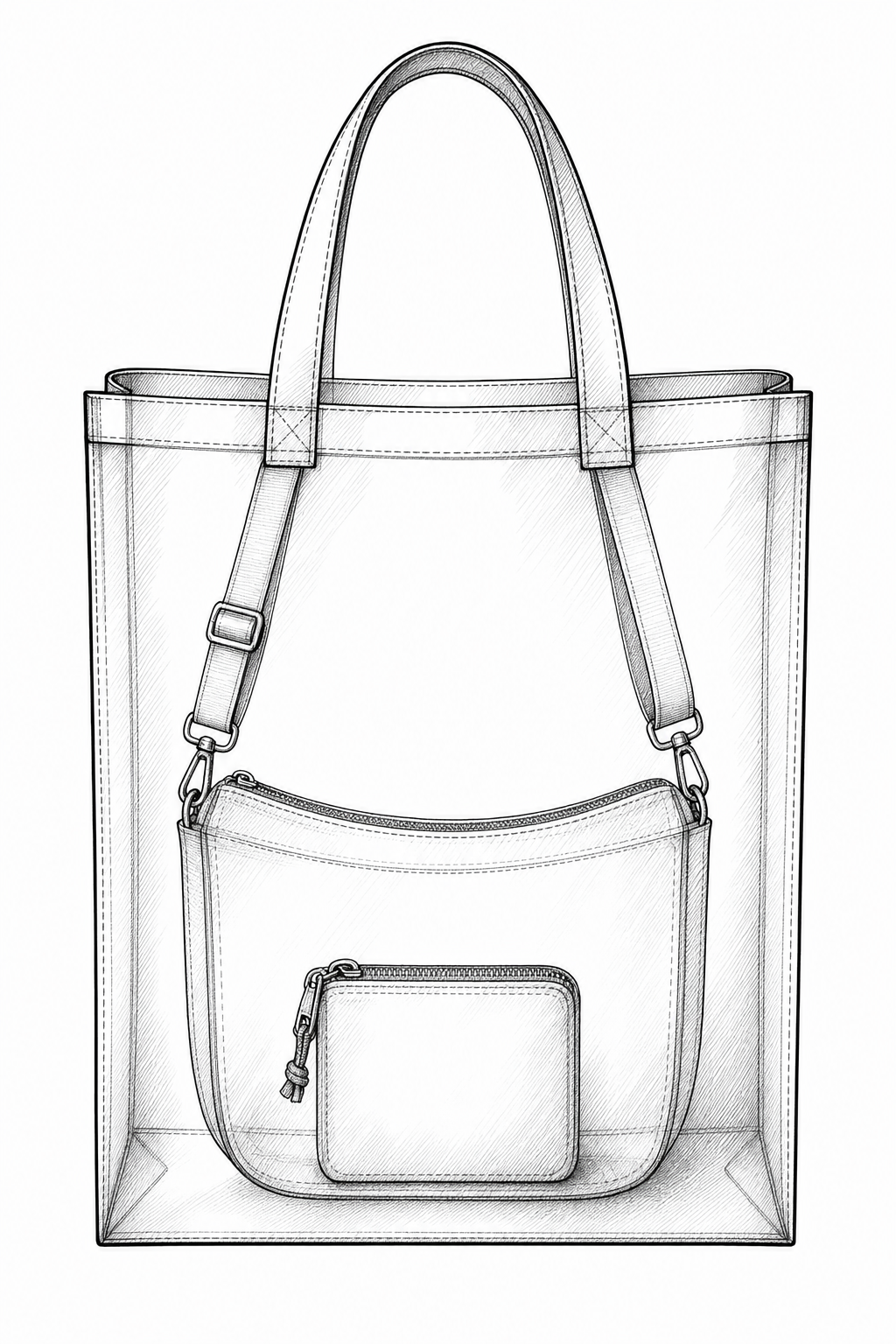 Layers answer questions you haven’t been asked yet. Illustrative only.