The PRVKE Lesson
How one camera bag forces structure into daily life.
- Volume
- 01
- Order
- № 01
- Read
- 1 min
- Tags
- prologue
- Published
The first bag was a WANDRD PRVKE (bought in school), 21 liter, Black, with Rainfly 21 (the rainfly sized for the 21L shell). Waterproof tarpaulin exterior, Robic 1680D ballistic nylon body, roll-top plus side access, padded camera cube compatibility, weather-resistant YKK zippers. Retail generation labels shifted across years; this manuscript names the material shell (what reviews call the PRVKE II-era build), not the hang tag. On paper it was engineered, purposeful, protective.
In practice it was the bag that made one fact clear: a bag optimized for one role (camera protection) will shape everything around it. The PRVKE was not a bag. It was a decision. Carry camera, accept structure. Accept structure, accept weight. Accept weight, accept that this system has a center of gravity in a lens and not in daily life.
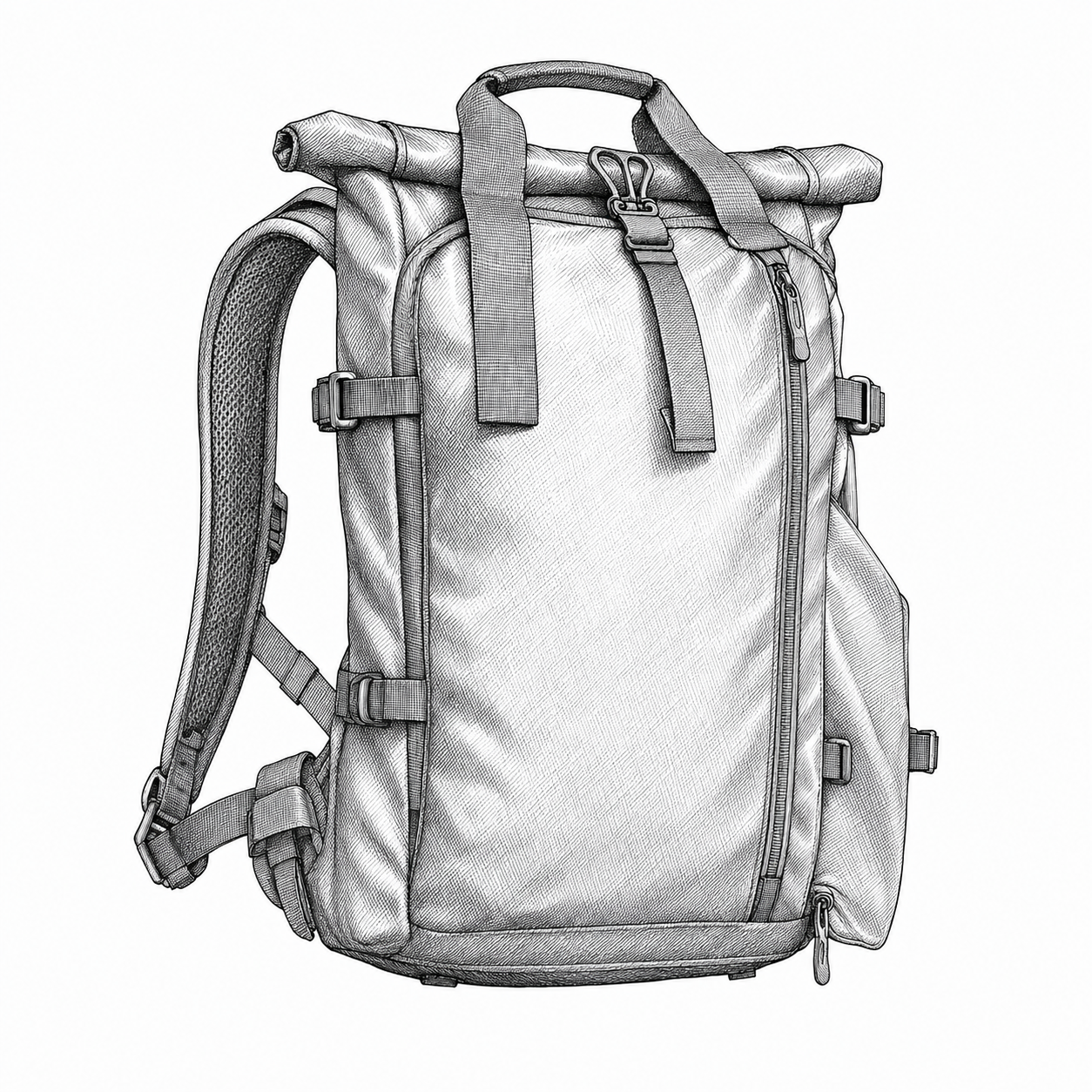
The gateway bag. The first one is never the right one. It is the teacher. Illustrative only.
The good news: once a bag teaches something, it can be retired. What follows is an attempt to write down everything learned between that first PRVKE and the current system, not as gear reviews, but as material science in plain English, told through the bags that made each lesson land.
The structure of this part - one material per chapter, polymer first, then weave, then bags - was motivated by u/strandedvariable’s Deep Dive series (strandedvariable.com). The research, prose, and opinions here are my own.
The next chapters walk the materials in reading order:
- Nylon
- Polyester
- X-Pac
- EcoPak
- Ultra, DCF, and UHMWPE
- Waxed canvas
- Leather
We open with nylon.